 en
News
Content
- 1 The Three Numbers That Define a Custom Manhole Cover
- 2 Material Comparison: Where Composite Wins and Where It Does Not
- 3 Hidden Numbers: What Actually Causes Custom Cover Complaints
- 4 Application Split: Where Custom Covers Are Specified
- 5 From Drawing to Delivery: Six Steps in a Custom Cover Order
- 6 Maintenance, Testing, and Compliance Notes
A contractor in Southeast Asia ordered 240 custom manhole covers with an embossed district logo and a 30 mm recessed tray for granite paving. The covers arrived on time, fitted the frames, and passed the D400 type test. Eight months later, 19 of them were rocking on a bus lane. The problem was not the logo, the tray or the resin: it was a 4 mm difference between the frame embedment depth on the approved drawing and the depth the road crew actually cast.
That pattern repeats in almost every custom cover dispute. The customised features are easy to discuss, while the interface dimensions that decide whether the cover survives traffic sit in a drawing note nobody re-checks on site.
The short answer: specify a custom manhole cover from three fixed numbers first, load class, clear opening and frame embedment depth, then treat logo, colour, paving tray and locking as add-ons. Rib design, material grade, seat clearance and gasket choice all follow from those three numbers. Lock them before the drawing is approved and customisation stays inexpensive; change them after casting and the same features turn into a rework claim.
The Three Numbers That Define a Custom Manhole Cover
Before any mould drawing is issued, the buyer and the manufacturer should agree on a single specification line. Everything else on a custom cover is negotiable; these three values are not.
1. Load class
EN 124 groups covers as A15, B125, C250, D400, E600 and F900, where the number is the test load in kN. SMC composite covers are routinely produced from A15 up to D400. E600 and F900 normally need the section weight of ductile iron or steel.
2. Clear opening
Clear opening is measured inside the frame, not across the cover. A cover described as 600 mm usually has an outside diameter of roughly 620 to 680 mm so it can land on the seat. Confirm the opening against the duct or pipe it serves.
3. Frame embedment depth
Frame depth must match the paving build-up. Asphalt on a rigid base typically needs a shallower frame than block paving with sand bedding. A mismatch here is the single most common cause of rocking covers.
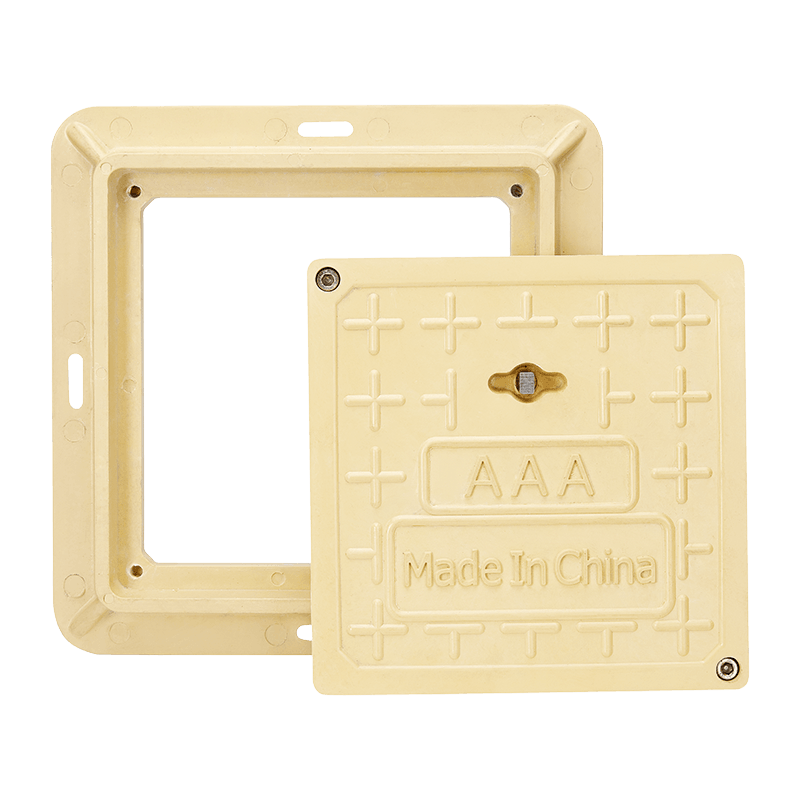
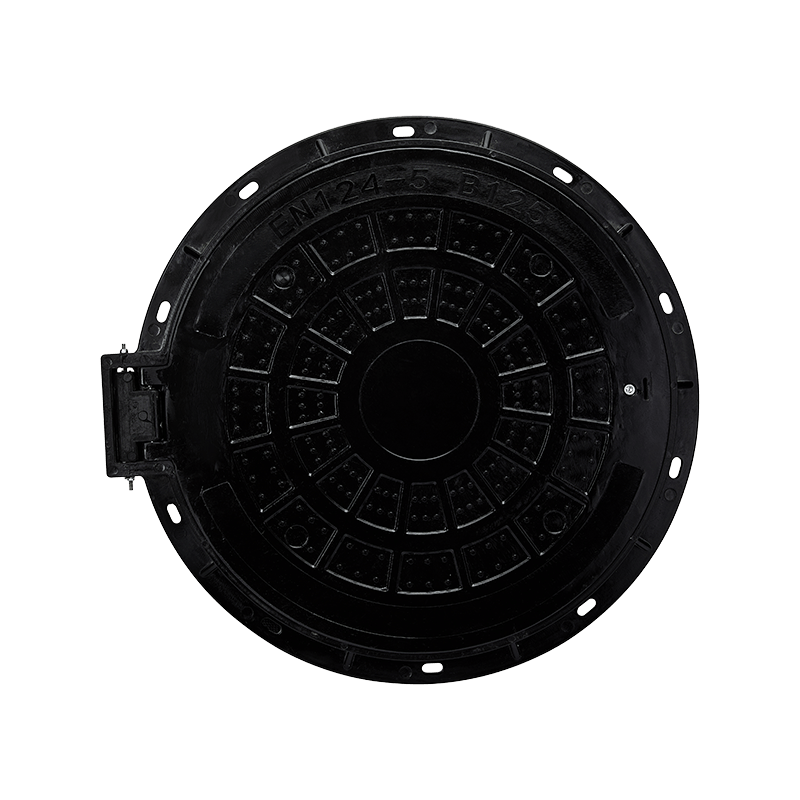
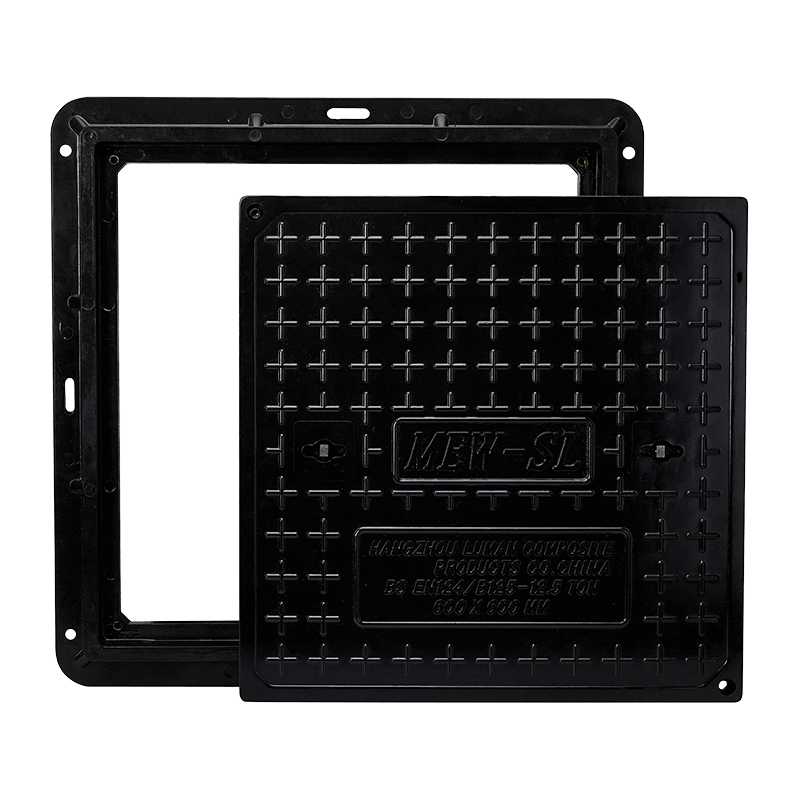
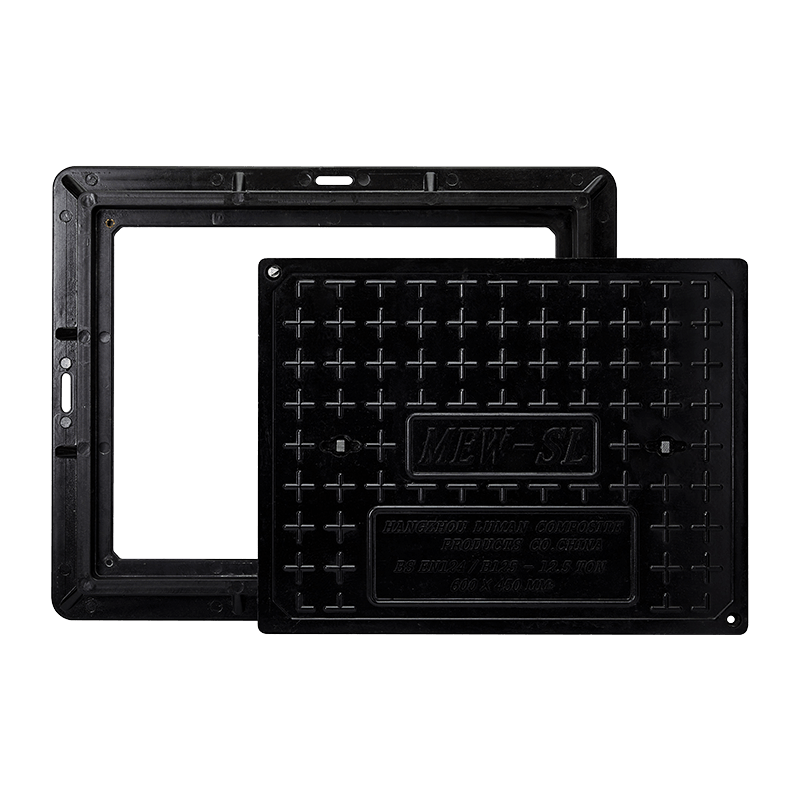
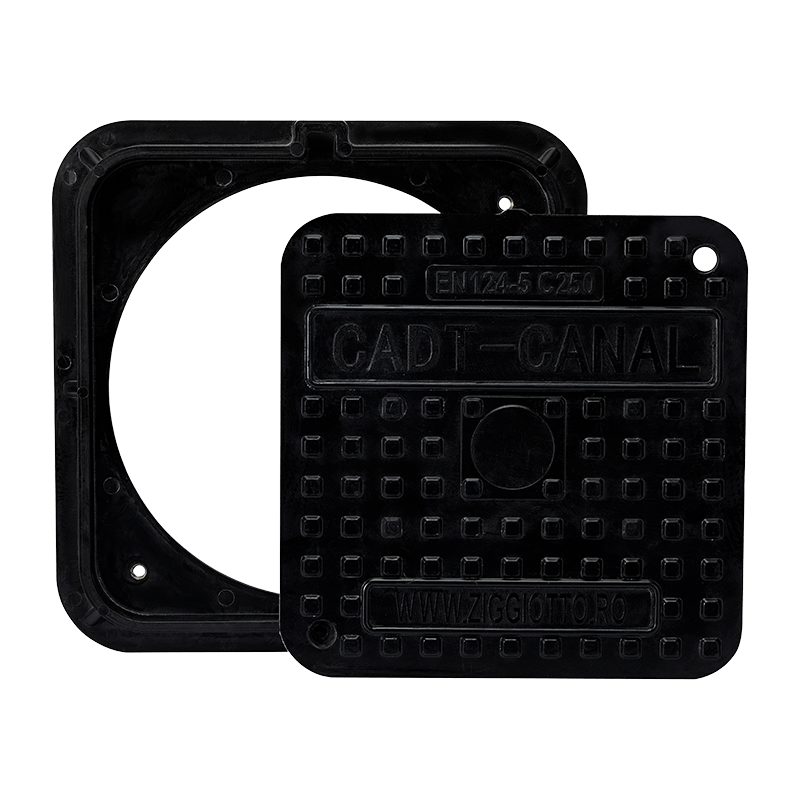
Once those are fixed, geometry is the next decision. Round covers self-centre, spread load evenly and are difficult to drop through their own opening. Square and rectangular covers suit service ducts, cable trenches and paved areas where the opening follows a straight line. If the opening is rectangular, check the diagonal too, because a square cover rotated 45 degrees can fall into a trench it was never designed for. We compare those trade-offs in this note on square cover geometry.
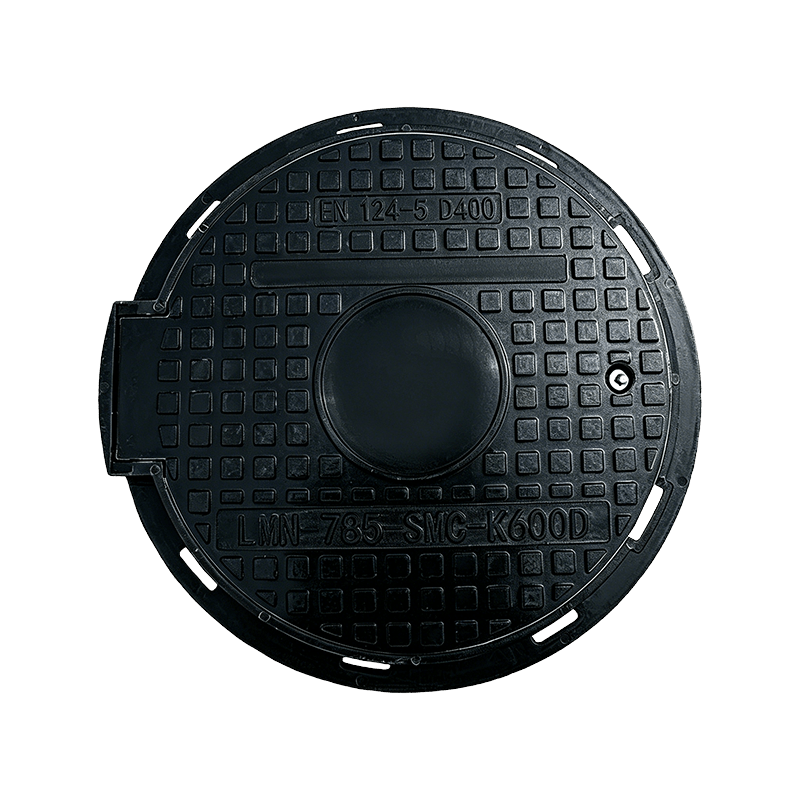 JF-Round Composite Manhole Cover SeriesLightweight SMC round covers with 600 mm clear opening, available in D400, C250 and B125 load ratings to replace cast iron.View Product →
Tolerances matter as much as the headline sizes. Cover-to-frame seat clearance is normally held between 0.5 mm and 2 mm; anything looser produces a rocking cover under a rolling wheel, and anything tighter jams after thermal cycling or grit ingress. Flatness, anti-slip surface class and gasket compression should all be stated on the drawing, not assumed from a sample.
Material Comparison: Where Composite Wins and Where It Does Not
Material choice sets the ceiling on load class, weight on site and how freely the cover can be customised. The comparison below uses a 600 mm clear opening cover at D400 as the reference point.
Material
Typical classes
Weight, 600 mm
Corrosion behaviour
Customisation fit
Cast iron
A15 to F900
95 to 120 kg
Rusts at scratched edges and needs coating
Logos cast in; colour limited to paint
SMC composite
A15 to D400
32 to 42 kg
Resin-rich skin resists road salt and sewage
Colour, logo, tray and ribs all moulded in
Polymer concrete
A15 to C250
55 to 75 kg
Good in service; chips at edges on impact
Limited shapes; heavy tooling cost
Fabricated steel
B125 to F900
70 to 95 kg
Needs galvanising and site re-coating
Weld-on frames and grates; less decorative freedom
Indicative figures for a 600 mm clear opening cover; actual weight and achievable class depend on the approved mould and rib design.
The practical reading is simple. If the cover sits over a carriageway or a dock apron and needs a logo, a colour and a paving tray, composite at D400 will normally deliver all three together. If the same location requires E600 loading, iron or steel remains the honest recommendation, and a supplier who promises otherwise is usually quoting a test result rather than a service life.
 Heavy Duty SMC Composite Round Manhole Cover600 mm clear opening round cover with up to 40-ton static load, available in D400, C250 and B125 ratings for roads and industrial areas.View Product →
Hidden Numbers: What Actually Causes Custom Cover Complaints
Factory inspection rarely predicts field performance, because most failures are installation-driven. The distribution below reflects the complaint patterns typically seen on custom composite cover projects.
34%
Bedding or depth error
26%
Load class lighter than traffic
18%
Seat clearance or rocking
12%
Gasket or odour sealing
10%
Surface or anti-slip wear
The useful insight is that 34 percent of problems trace back to bedding and embedment depth, which costs almost nothing to control at the drawing stage and a great deal to fix after paving. Weight is the second hidden number. A 600 mm D400 composite cover is roughly one third the weight of its iron equivalent, which changes handling: two installers can position it by hand, but a cover that light also lifts more easily under suction or vibration, so locking and seat fit deserve more attention, not less.
Application Split: Where Custom Covers Are Specified
Customisation requests cluster by application, because each environment constrains the cover differently.
- Municipal roads and sidewalks: 26%
- Metro and rail corridors: 24%
- Commercial complexes and plazas: 22%
- Airports and ports: 16%
- Industrial plants and utilities: 12%
Metro and commercial projects drive most of the aesthetic customisation, since the cover sits in a finished surface and carries a client logo, a paving tray or a specified colour. Airport and port work pushes the opposite way, prioritising load class, lifting points and traceable test reports. Municipal roads are usually standard sizes with custom frames, and industrial sites tend to ask for non-standard openings, cable cut-outs or bolted-down covers. A single supplier that can handle both the decorative and the heavy-duty end of that spread is worth more than one that only quotes from a catalogue.
From Drawing to Delivery: Six Steps in a Custom Cover Order
A controlled custom order moves through six checkpoints. Skipping any of them usually shows up later as a site variation.
1
Fix the three numbers and put them on one line of the enquiry: load class, clear opening, frame embedment depth.
2
Confirm the installation build-up and frame method: cast in, bolted, or set in a concrete collar.
3
Define visible customisation: logo depth, colour, paving tray depth, anti-slip pattern, hinges or lifting points.
4
Review material and rib design against the test load, and ask for the type-test report rather than a drawing alone.
5
Approve a first article, measured for seat clearance, flatness and weight, before the batch is moulded.
6
Ship with documentation: declaration of performance, material records and a packing plan matched to the site sequence.
 Custom SMC Composite Molding ServiceDeep customization for complex shapes, performance properties and surface finishes, with mold development, sample confirmation and mass production for composite manhole cover projects.View Product →
Maintenance, Testing, and Compliance Notes
Compliance on a custom cover is documented, not decorative. Keep the type-test report, the declaration of performance and the installation record together, because an inspector checking a non-standard cover will ask for the pairing of cover and frame, not for the cover alone.
- Check seat clearance and rocking annually on trafficked covers, and more often on bus lanes and dock aprons.
- Clear drainage slots and lifting keyways before winter; trapped grit is the main cause of seized covers.
- Replace gaskets on odour-controlled or gas-tight covers instead of re-tightening them.
- Never weld, drill or grind a composite cover to make it fit; the seat and ribs are part of the load path.
- Order replacements by mould number, since a nominally identical 600 mm cover from another mould may not seat.
Service parts, matching frames and non-standard sizes for these components are listed across the composite cover range, which is the fastest way to confirm whether a requested size already exists as a proven mould before new tooling is quoted.
Custom manhole covers are a specification exercise first and a design exercise second. The logo, the colour and the paving tray are about ten percent of the project risk; load class, clear opening, embedment depth and seat tolerance carry the rest. Get those four right, insist on a first-article check, and keep the documentation with the asset record, and a custom cover will behave exactly like the standard product it replaced, with the site identity the client asked for.