 en
News
Content
- 1 What You Are Actually Buying From a Composite Structure Manufacturer
- 2 SMC, RTM and Pultrusion: Matching Process to Structure
- 3 Composite, Cast Iron and Concrete Side by Side
- 4 The Failure Drivers Nobody Puts on a Datasheet
- 5 Where Composite Structures Get Specified
- 6 Cost, Payback and a Five-Step Sourcing Sequence
- 7 Maintenance, Compliance and the Paper Trail
A municipal contractor sends over a drawing: a 600 x 600 mm access cover for a pedestrian plaza, B125 load class, 40-tonne axle traffic in the service lane 1.2 m away, and a five-year maintenance-free requirement. The real question behind the question is not who can mold the shape. It is who can show, in test data and tolerance sheets, that the load path still holds after twenty years of thermal cycling, de-icing salt and the occasional overloaded delivery truck.
That gap between a molded part and a verified structure is where composite suppliers separate, and it is exactly the gap most purchase orders never describe.
The short version: a composite structure manufacturer sells four things: a resin formulation, a reinforcement architecture, a controlled process window, and the evidence that all three stay inside tolerance. Resin, wall thickness and cure cycle decide whether the part performs. The molding method decides what it costs. Ask for the test report before you ask for the price.
What You Are Actually Buying From a Composite Structure Manufacturer
Composite is a family, not a material. Two suppliers can quote the same 600 x 600 mm cover and deliver parts that behave nothing alike, because four variables interact. Get any one of them wrong and the part still looks perfect at the factory gate; it fails two winters later in the field.
Resin system
Orthophthalic polyester is the budget default. Isophthalic and vinyl ester grades resist hydrolysis and dilute acid attack, which matters in sewer and coastal installations. Epoxy buys fatigue life at two to three times the resin cost and is usually reserved for load-critical frames.
Reinforcement architecture
Chopped strand mat produces near-isotropic panels. Continuous roving placed along the bending axis multiplies stiffness where it counts. For sheet molding compound, a glass content of roughly 25 to 35 percent by weight is the normal working range.
Process window
Mold temperature, cavity pressure, cure time and demold timing are set by the compound supplier, not by operator habit. A 10 degree drift in mold temperature can shift flexural strength by double digits before anyone notices a visual defect.
Test evidence
Flexural strength to ASTM D790, water absorption to ISO 62, and a load class verification to EN 124 are the three reports worth reading first. A supplier who cannot name the test method behind a claim is selling a shape, not a structure.
When a buyer specifies a composite structure, what is really being specified is the combination of these four. That is why a quote listing only dimensions and a price cannot be compared against one listing a resin grade, a glass content and a cure schedule.
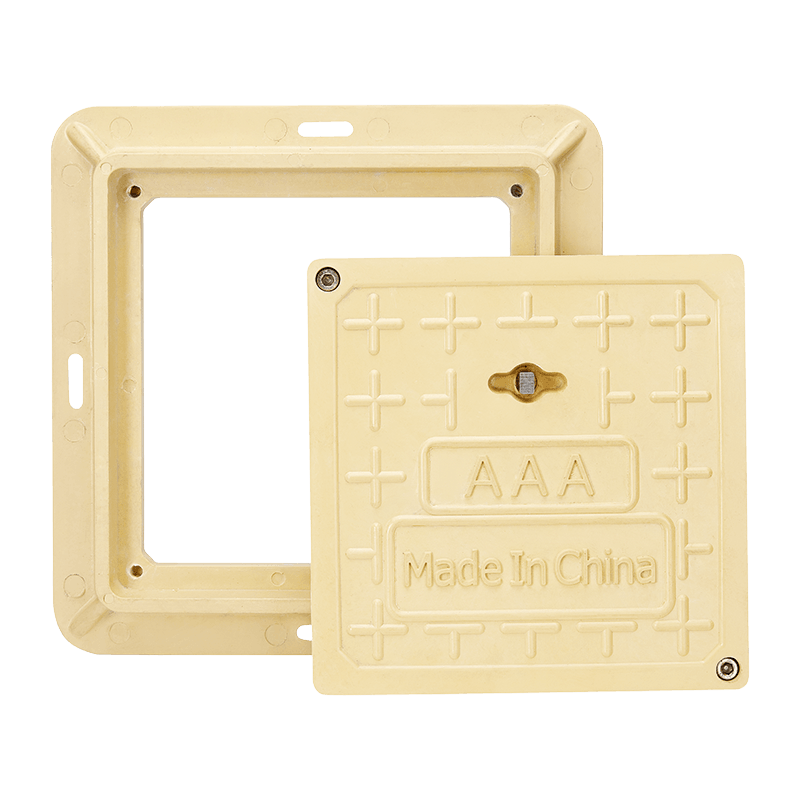
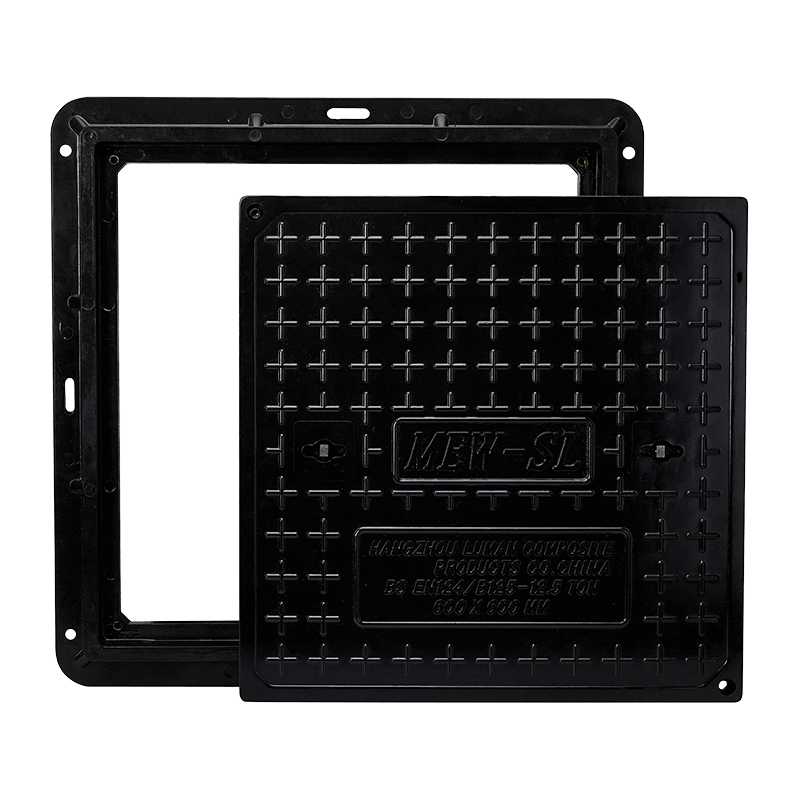
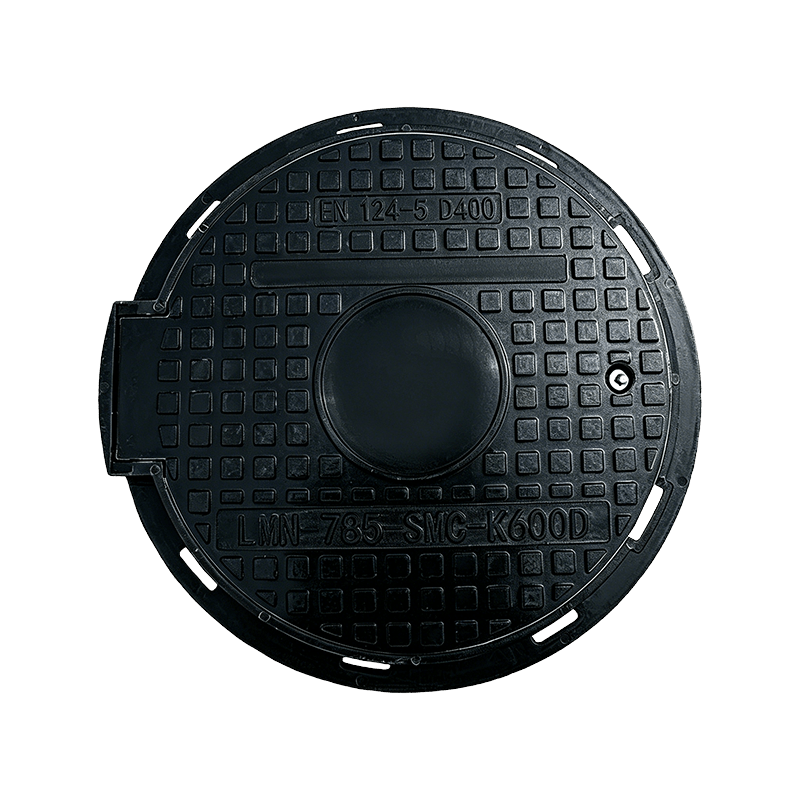 SMC Composite Manhole Covers ManufacturersDiscover the next generation of urban infrastructure with JF-Composite Manhole Covers. Engineered by JF-Composite, a trusted name in municipal mouldings, these covers ...View Product →
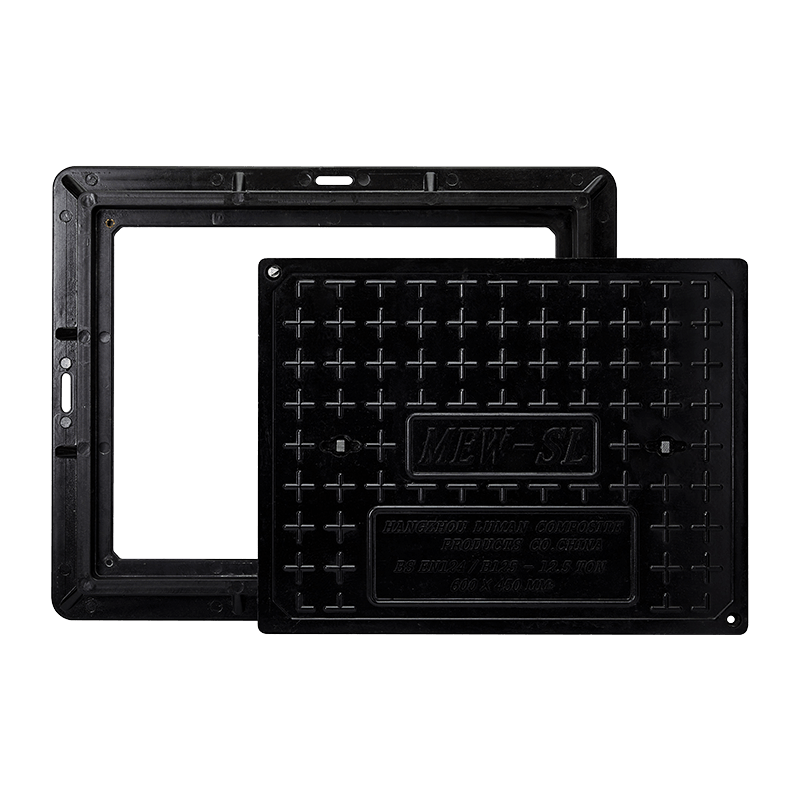
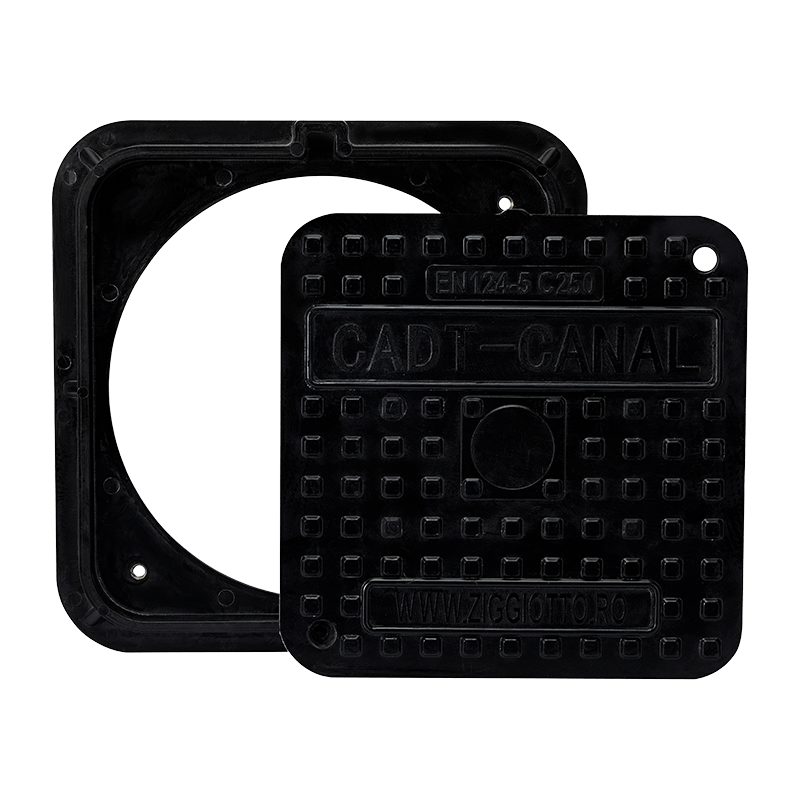
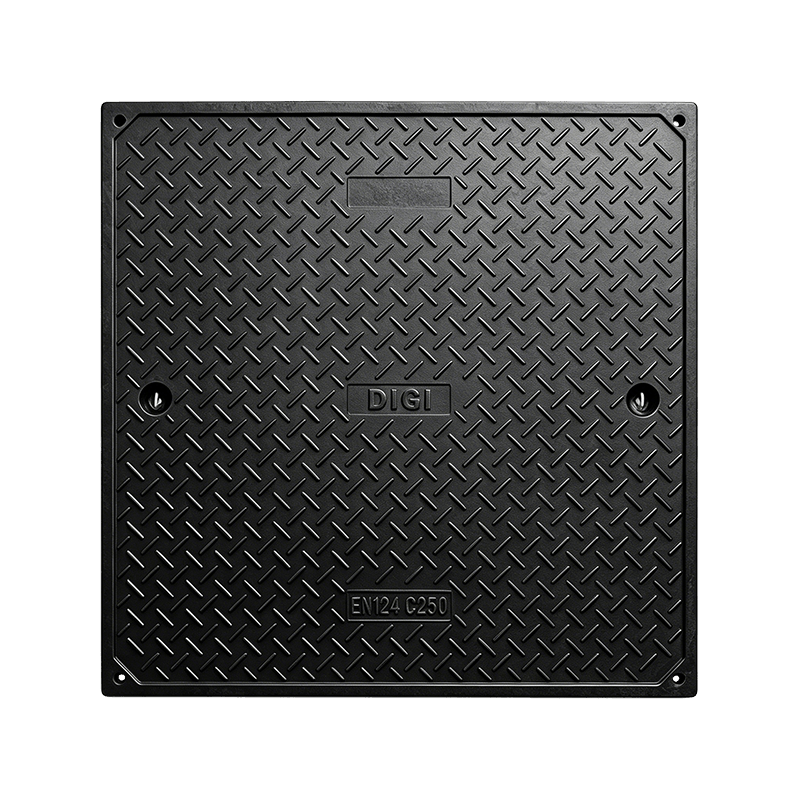
For below-ground access openings, this combination shows up in the cover, the frame and the seating geometry as one assembly. A cover that passes a load test on a rigid steel platen can still deflect beyond tolerance when it sits on a poorly bedded frame, which is a bedding problem disguised as a material problem.
SMC, RTM and Pultrusion: Matching Process to Structure
Three processes cover most composite infrastructure work, and each one has a failure mode that the others do not.
SMC compression molding
Sheet molding compound is the workhorse for covers, chambers and meter boxes: chopped glass in a polyester paste, molded between 130 and 150 degrees Celsius under 5 to 15 MPa, with cycle times of a few minutes for a 600 mm part. Low-profile additives hold shrinkage between roughly 0.05 and 0.2 percent, which is what keeps covers and frames inside a plus or minus 0.5 mm fit.
RTM and vacuum infusion
Dry reinforcement is laid into a closed mold and resin is drawn in under pressure or vacuum. Fiber volume reaches 50 to 60 percent, directional stiffness is easier to control, and surfaces come out clean on both faces. Tooling cost is higher, so the process pays off on repeat runs and on parts where appearance and stiffness must both be specified.
Pultrusion
Continuous roving is pulled through a heated die to produce constant-section profiles: channels, ladder rails, walkway members, stiffening ribs. Axial strength is excellent; transverse strength is weak, so every joint needs mechanical fastening or a properly prepared secondary bond. Pultruded parts behave badly when a designer treats them like steel and cuts a notch across the fiber direction.
Match the process to the geometry and the load path, not to whatever tooling the supplier already has on the floor. A pultruder quoting a compression-molded chamber is usually a sign that the process discussion has not happened yet.
Composite, Cast Iron and Concrete Side by Side
Most specification arguments come down to weight, corrosion and handling. The figures below are typical ranges for a 600 x 600 mm, B125-class access cover with a matching frame.
Typical ranges for a 600 x 600 mm B125 cover set. Bedding quality, traffic loading and installation depth move real-world performance further than the material choice does.
The Failure Drivers Nobody Puts on a Datasheet
Replaced composite structures rarely trace back to the material datasheet. They trace back to five causes that appear again and again in municipal inspection programs. Treat the distribution below as a checklist rather than an audit result.
32%
Under-cure
24%
Wrong load class
18%
Bedding and backfill
14%
UV and pigment loss
12%
Installation impact
Under-cure leads the list because it is invisible. A part pulled 30 seconds early looks identical to a correct one, yet cross-link density never reaches specification and flexural strength can drop by a fifth. The failure appears as a hairline crack at a corner, months later, and gets blamed on traffic.
The second cause is a paperwork failure rather than a manufacturing one: a B125 product installed in a C250 traffic zone because the drawing was never updated after the road layout changed. Bedding problems follow the same pattern. A composite cover needs a flat, fully supported seating ring; bridging it across an uneven frame turns a 12.5-tonne class rating into a point-load test the part was never designed to pass.
Where Composite Structures Get Specified
Demand for composite structures clusters in five settings. That split explains why suppliers who serve several of them can amortize one tooling investment across more than one product family.
Municipal water and sewer: 32%
Roads and transport: 26%
Utility metering: 17%
Industrial plants: 13%
Commercial buildings: 12%
- Water and sewer networks use access chambers, handhole chambers and covers where corrosion and infiltration control matter more than unit price.
- Roads and transport specify round and square covers by load class, and rarely by appearance, so tolerance control drives the purchase decision.
- Utility metering leans on water, gas and electricity meter boxes, where the composite part is judged on UV stability and read-out access.
- Industrial plants ask for non-conductive covers and trench elements in chemical or wash-down environments.
- Commercial buildings specify drainage gratings and light-duty covers, where a low-profile frame and clean surface finish matter.
 Manhole Chamber ManufacturersThe JF-C composite manhole is specifically designed for personnel access and maintenance. Utilizing a high-strength SMC molding process, it features a smooth, high-str...View Product →
Underground chambers are the clearest example of this clustering. The same base geometry serves a water valve, a telecom pull point or a drainage junction, and only the cover class, depth and inlet configuration change. That is why a supplier's chamber and cover ranges are usually designed together rather than sold separately.
Cost, Payback and a Five-Step Sourcing Sequence
A composite cover set typically costs 1.4 to 2.0 times a cast-iron equivalent at the unit level, and the payback almost never comes from the unit price. It comes from installation labor, coating maintenance, replacement frequency and theft. A two-person lift instead of a mechanical lift on a small paving job, repeated across hundreds of openings, is where the arithmetic turns.
- Fix the load class and the geometry first. Confirm the traffic zone, the clear opening and the frame depth before any material discussion begins.
- Write the resin and reinforcement into the specification. Name the resin family, the glass content range and the molding process. "Composite" alone is not a specification.
- Request test evidence with the quotation. Flexural strength, water absorption and a load class report should arrive before the first sample, not after the first field failure.
- Validate the tolerance stack against the frame. Ask for cover-to-frame clearance and flatness figures, then measure a first article on site rather than on a bench.
- Agree on documentation and spares. Batch records, resin certificates and a spare parts list protect the asset long after the warranty period ends.
A useful cost model for molded composite parts, including how tooling amortization and cycle time interact with order volume, is set out in this buyer's guide with cost and ROI data. The method transfers directly to covers, chambers and meter boxes even though the example product is different.
Customization ManufacturersSMC composite molding products break new ground with their material, ushering in an era of deep customization. Unlike the unchanging nature of standard parts, we lever...View Product →
Non-standard geometry is where an experienced manufacturer earns the premium. Sloped frames, non-square clear openings, cable entry cut-outs and coloured surfaces all require mold changes and process re-validation, and a supplier with in-house material and structural engineering can usually answer those questions in days rather than weeks.
Maintenance, Compliance and the Paper Trail
Compliance in this category is mostly about traceable load class and documented material behavior. EN 124 governs gully tops and manhole covers across classes A15 through F900, and the class marking on the finished part should match the declaration supplied with the shipment. Fire performance is usually declared under EN 13501-1, and pultruded structural profiles are commonly qualified to EN 13706 where stiffness data is required.
On the maintenance side, composite structures need far less attention than coated metal, but "less" is not "none". A practical annual routine includes:
- Inspect the seating ring for bedding loss before checking the cover itself; most movement originates below the frame.
- Check lifting keys and hinge points for wear, and replace them as consumables rather than repairing the cover.
- Clean with water and a mild detergent; solvent wiping dulls the gelcoat and accelerates pigment loss.
- Re-rate any opening after surface grinding or cutting, since a reduced section changes the load class.
For procurement files, keep three documents with every delivery: the batch record with cure data, the resin certificate of analysis, and the load class test report for that product family. When a structure is inspected five years later, those three pages answer most questions faster than a site investigation.
The practical test of any composite structure manufacturer is simple. Ask two questions: which resin, glass content and cure schedule were used for this part, and which test method proves the load class. Suppliers who answer both without a follow-up email are the ones whose parts are still in the ground when the next inspection round arrives.