 en
en News
Content
- 1 What SMC Actually Is: Material Composition and Molding Process
- 2 Material Comparison: SMC vs. Stainless Steel vs. Ceramic vs. Terrazzo
- 3 15-Year Total Cost of Ownership: The Number Most RFPs Miss
- 4 Where SMC Composite Wash Basins Are Actually Deployed
- 5 Selection and Procurement Workflow
- 6 Maintenance and Compliance Considerations
- 7 Frequently Asked Questions
- 8 Summary
Municipal facility managers replacing worn-out washroom fixtures at highway service areas, transit terminals, and urban parks are increasingly specifying the SMC composite wash basin over stainless steel or ceramic alternatives. The reason is not aesthetics — it's a documented shift in how procurement teams calculate total cost of ownership once vandalism, freeze damage, and corrosion enter the equation.
Core Finding
Across a 15-year service cycle, an SMC composite wash basin installation typically runs 35–45% lower total cost of ownership than stainless steel or vitreous china basins in high-traffic public settings, driven primarily by zero corrosion replacement, near-zero cracking under impact, and maintenance cycles roughly one-third as frequent.
What SMC Actually Is: Material Composition and Molding Process
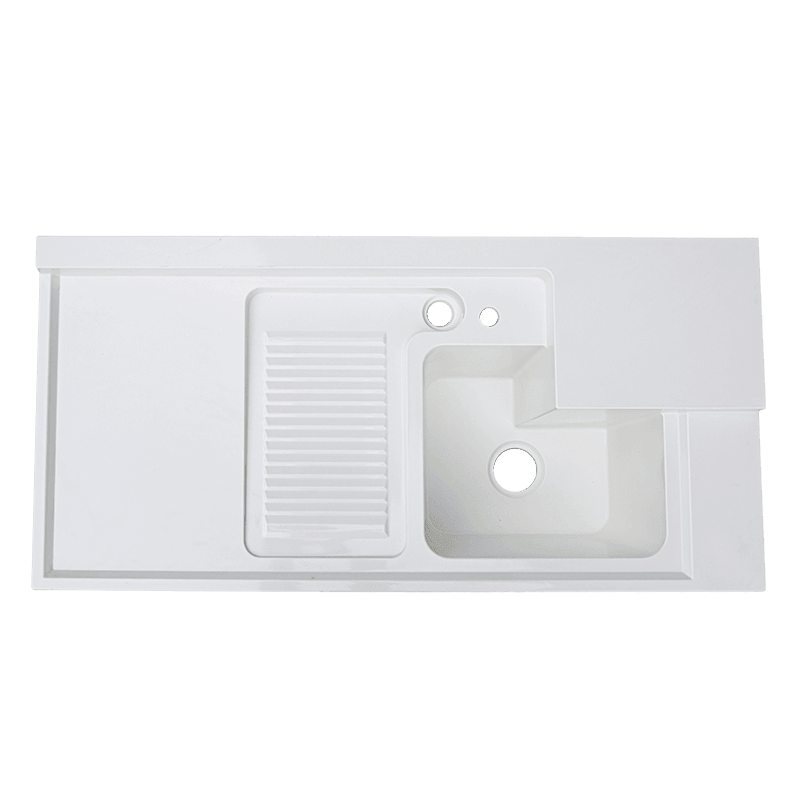
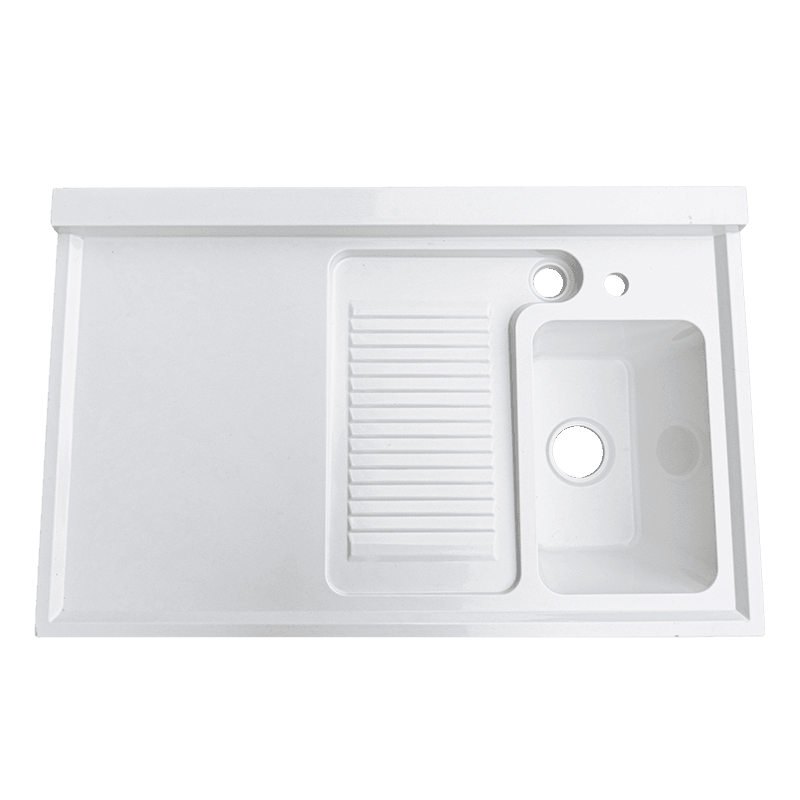
SMC — Sheet Molding Compound — is a fiberglass-reinforced unsaturated polyester composite. Chopped glass fibers (typically 25–30mm, 20–30% by weight) are impregnated into a resin paste loaded with calcium carbonate filler and pigment, then compression-molded under 800–1,200 tons of pressure at 140–160°C. The result is a single-piece, seamless basin shell with no welds, grout lines, or joints where bacteria or grime can accumulate — a structural difference that separates it fundamentally from fabricated stainless steel or cast ceramic units.
Corrosion Immunity
No metal substrate means no rust, no pitting from de-icing salt spray, and no electrolytic corrosion near dissimilar metal fittings.
Impact & Vandal Resistance
Compression-molded SMC withstands blunt impact loads that dent stainless steel or fracture ceramic, without deforming or cracking.
Non-Porous Surface
The gel-coat finish is sealed and non-absorbent, limiting bacterial colonization and simplifying disinfection protocols in high-traffic restrooms.
Lightweight Installation
At roughly 40–60% the weight of an equivalent terrazzo or cast concrete basin, SMC units reduce structural support requirements and labor time on-site.
UV & Weather Stability
Gel-coat pigmentation resists chalking and fading under sustained UV exposure, holding color consistency in outdoor and semi-outdoor installations for over a decade.
Mold-Based Customization
Compression molds allow integrated basin runs, custom widths, and embedded mounting brackets without secondary fabrication steps.
Material Comparison: SMC vs. Stainless Steel vs. Ceramic vs. Terrazzo
Specification teams rarely compare basin materials on a single axis. The table below lines up the variables that actually drive a procurement decision for public washroom installations.
Table 1: Comparative performance ranges for public washroom basin materials, based on typical manufacturer specification data and field service intervals.
15-Year Total Cost of Ownership: The Number Most RFPs Miss
Purchase price comparisons rarely reflect what a basin actually costs a facility over its service life. Replacement labor, water-damage remediation from cracked seals, and repainting cycles compound quickly. Modeled over 15 years for a standard four-basin public restroom trough installation:
$4,200
SMC Composite
$6,900
Stainless Steel
$6,100
Vitreous Ceramic
$5,600
Terrazzo/Concrete
Figure 1: Estimated 15-year total cost of ownership per four-basin trough unit — purchase price plus modeled maintenance, repair, and replacement labor.
The gap widens further in coastal and high-humidity regions, where stainless steel is prone to chloride-induced pitting corrosion within 6–8 years absent a passivation maintenance program — a cost line item frequently omitted from initial procurement models.
Where SMC Composite Wash Basins Are Actually Deployed
Demand for composite washroom fixtures clusters around facilities with heavy foot traffic, exposure to weather, or limited maintenance staffing. A rough breakdown of typical procurement volume by end-use sector:
Highway service areas & rest stops — 30%
Urban parks & public plazas — 27%
Transit hubs (rail/bus/airport) — 20%
Schools & campus facilities — 15%
Commercial & retail complexes — 8%
Figure 2: Estimated distribution of SMC composite wash basin installations by end-use sector, based on typical municipal and infrastructure procurement patterns.
Highway rest stops lead adoption largely because they combine two stress factors at once — near-continuous public use and unattended overnight hours, which is precisely the impact-and-vandalism profile SMC composite construction is built to absorb.
Selection and Procurement Workflow
Specifying a composite wash basin correctly upfront avoids costly change orders during installation. A standard six-step workflow:
1
Site & Load Assessment
Confirm foot traffic volume, exposure to freeze cycles or coastal salt spray, and existing plumbing rough-in dimensions before spec review.
2
Gel-Coat & Reinforcement Spec
Verify gel-coat thickness (typically 0.4–0.6mm), glass fiber content, and whether an anti-graffiti or anti-microbial coating layer is required.
3
Mold Design & Customization
Determine basin run length, tap-hole positions, drain configuration, and integrated soap/dryer mounting points for compression mold tooling.
4
Production & Quality Control
Compression molding and curing, followed by dimensional checks, surface hardness testing, and leak testing of integrated drain fittings.
5
Installation & Plumbing Integration
Wall or pedestal mounting, connection to supply and drain lines, and sealing of joints with compatible sealants (avoid solvent-based products that attack gel-coat).
6
Maintenance Plan Handover
Document approved cleaning agents, inspection intervals, and warranty terms for facility maintenance staff.
Maintenance and Compliance Considerations
SMC composite basins tolerate a wider range of cleaning chemistries than stainless steel, but a few practices extend service life meaningfully:
- Use neutral-pH or mildly alkaline cleaners; avoid concentrated acidic descalers, which can dull the gel-coat over repeated use.
- Avoid abrasive scouring pads — a soft cloth or non-abrasive sponge preserves the gel-coat's stain and graffiti resistance.
- Inspect drain gaskets and mounting brackets annually; the basin shell itself rarely needs structural inspection before year 10.
- For accessibility compliance, confirm rim height, knee clearance, and faucet reach against local ADA or equivalent accessibility codes before final mold approval — these dimensions are locked in at the tooling stage and cannot be adjusted post-production.
- Where water-efficiency certification is required for public procurement, pair the basin with a certified low-flow faucet and sensor system rather than relying on basin design alone.
Frequently Asked Questions
Is an SMC composite wash basin more durable than stainless steel?
Against corrosion, yes — SMC has no metal substrate to pit or rust. Against dents from blunt impact, both perform well, but SMC returns to its original surface finish without visible deformation, while stainless steel can retain permanent dents.
Can SMC wash basins be installed outdoors in freezing climates?
Yes. The composite shell itself does not crack from freeze-thaw cycling the way ceramic or concrete can. The plumbing lines still require standard frost protection or seasonal draining in sub-zero climates.
What is the typical lead time for custom-molded SMC basin production?
New mold tooling generally adds several weeks upfront; once a mold exists, production runs are considerably faster. Exact timelines depend on order volume and customization scope, so confirming a schedule directly with the manufacturer before finalizing installation dates is recommended.
Does the gel-coat surface discolor or yellow over time?
Quality gel-coats formulated with UV-stabilized resin resist chalking and yellowing for well over a decade in outdoor exposure. Lower-grade gel-coats without UV additives can fade noticeably within a few years — this is a spec detail worth confirming before order.
Can SMC basins be repaired if damaged, or do they need full replacement?
Minor surface scratches or chips can typically be filled and refinished with a matching gel-coat repair kit on-site. Deep structural cracks generally warrant full unit replacement, though this is rare given the material's impact tolerance.
Are SMC composite basins hygienic enough for schools and hospitals?
The non-porous, seamless surface limits bacterial harborage compared to grouted ceramic or seamed metal fixtures, and many manufacturers offer antimicrobial gel-coat additives for higher-hygiene-demand settings.
How does basin weight affect installation cost?
Lighter SMC units typically require less reinforced wall backing and fewer installers, which can meaningfully reduce labor hours compared to heavier terrazzo or cast concrete basins on retrofit projects with existing wall structures.
What color and finish options are available for custom projects?
Since pigment is integrated into the gel-coat rather than applied as a surface paint, color options are largely limited only by the mold and pigment batch — including matte, semi-gloss, and stone-effect textured finishes for architectural matching.
Summary
For procurement teams weighing washroom fixture options against a multi-decade service window, the data consistently favors the SMC composite wash basin: lower lifecycle cost, immunity to corrosion, resistance to vandalism, and a lighter installed weight that simplifies retrofit projects. The upfront unit price may sit close to alternatives, but the maintenance and replacement curve is where the material earns its place in high-traffic public infrastructure specifications.
Hangzhou Jufeng Urban Support Equipment Co., Ltd. produces custom-molded SMC composite wash basins and integrated washroom systems for highway service areas, transit hubs, and municipal park facilities. Facility managers and procurement teams evaluating a basin replacement or new-build specification are welcome to request technical drawings and material test data for project-specific review.